
Marc-André Côté — Canadian Photographer, Photo Gallery: Nature, Cities, Society and Life
Links
-

Link to my recently added images.
-

Here is my YouTube channel, my images in video montage form.
-

Link to my blog, where I comment on my images.
-

Facebook, to learn a little more about me.
Earth · Snow · Steel and Concrete · Sapiens · Silver · Ether
The Greeks of antiquity defined the universe through four elements: air, fire, earth, and water. Anaximander (c. 610 BC – c. 546 BC) is believed to have been the first known Greek to publish a written work on nature. He explained how the four elements of ancient physics — air, earth, water, and fire — came to be. He also held that everything that dies returns to the element from which it came (an idea later echoed by Aristotle and within the Judeo-Christian tradition).
Today, the elements the ancient Greeks imagined to explain the world belong more to poetry than to physics. Just as they defined the universe through their powers of observation, I chose to create my own elements to compose my universe — and in doing so, to help classify my images.
Earth
Greens, autumn colours, landscapes, and all images relating to dry land. Light and shadow, texture, isolated subjects that become beautiful through the sudden importance we give them. A landscape can represent the vastness of space, but it can just as easily illustrate small, unremarkable worlds we no longer see because we no longer look.
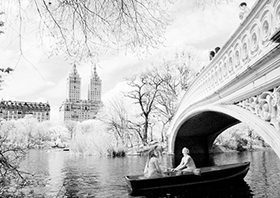
Silver
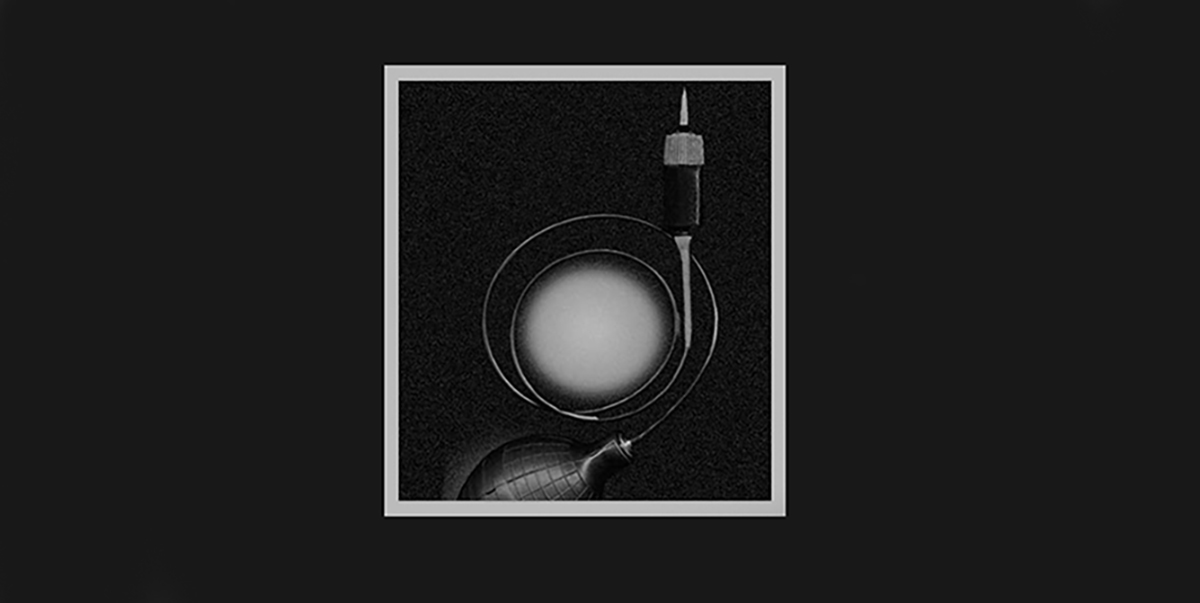
Black-and-white and infrared images. Black-and-white images call for a more cerebral reading, in contrast to colour images, which speak more to our emotional side. Without the colours that stir our primary senses, we must decode the content of the image through our knowledge of the world around us, and through the graphic lines that reveal the shapes and texture of objects. Black and white is a stripped-down world where content becomes more important than colour.
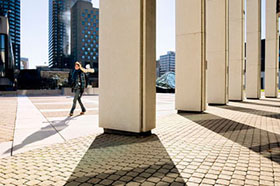
Steel & Concrete
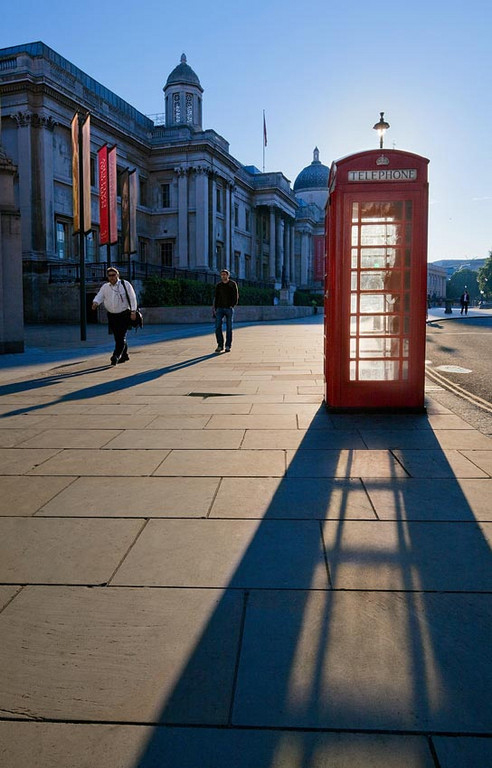
Cities, urban landscapes, architecture — where Homo sapiens live among one another. I like combining people within the architectural context of their cities.
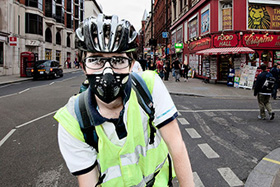
Sapiens
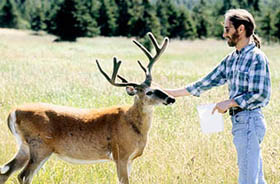
Portraits and human activities: Homo sapiens (the thinking man) is the most fascinating element to capture. How Homo sapiens lives, eats, behaves in society, spends leisure time, dresses, and cares for children — these are all moments that are difficult to capture in photography, but which bring me great satisfaction. These captured portraits and moments, I hope, may one day become a visual record of the intense and entirely different life the human species has never before lived. I am convinced that, like the mirror — a tool that seems so ordinary — photography holds great importance in our everyday lives. Today’s portraits will allow our descendants to reflect on their own images, but in a future that will be completely different.
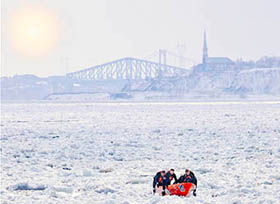
Snow
Winter landscapes: as a Canadian photographer, this element is part of my life four months of the year.
Ether
The fifth element, for more artistic images. The fifth element… no, it isn’t only a Luc Besson film — a fifth element of ambiguous status is added to these four: the aether, in which the cosmos is said to be immersed. A fifth element also exists in Indian and esoteric traditions, sometimes called Akasha, which in Sanskrit means ether or spirit.

Acknowledgements
Thanks to my friends who, through their translations of this page, give me the chance to present my site in several languages. I wish I had a gift for languages, so I could better understand the human spirit. I sometimes dream that all people speak every language. That would be the start of a new era in which we would learn to know one another, to appreciate our cultural differences, and in time mutual respect would come naturally. Let’s take the more realistic part of that dream and turn the problem around: let’s consider English as perhaps one of the first common languages of humanity. Klingon (for the Star Trek fans) might be a more neutral alternative, but its beginnings as an international language are still too modest, and as for Esperanto, despite 100 years of effort, it hardly does better than Klingon.
Thank you, and enjoy your visit.
Marc-André Côté

Prints and Downloads
If you wish to purchase an image, while browsing the site, click on the image to view it full-size on screen. Click the Price/Add to Cart link on the right to see the options described below (Prints or Downloads). The process is quick and simple; however, at the final step of checkout, you will need to register to complete your purchase.
Downloads for Commercial Use
For a simpler, faster process, you’ll find only one choice in the region section: World Wide. Licenses are therefore authorized for worldwide use — after all, we live in the era of the www (world wide web). My images are available as maximum-quality JPG files in the Adobe 98 profile. Note that a high-quality JPG file compares well to a TIFF or Photoshop file, while being smaller in size (MB).
Photographic Prints for Personal Use
Photographic prints for personal use (home or office decor) are available through a photo lab renowned for the quality of its prints, which ships worldwide.
Artist Inkjet Prints, Made by the Photographer
If you would like an artist-quality inkjet print, you can choose between two high-quality papers: Hahnemühle Fine Art Pearl, a semi-gloss paper with a lightly textured finish, and Hahnemühle Photo Rag, a 100 % cotton, off-white, lightly textured paper. Information: Hahnemühle. I print these myself. Images are shipped rolled in a cardboard tube.